
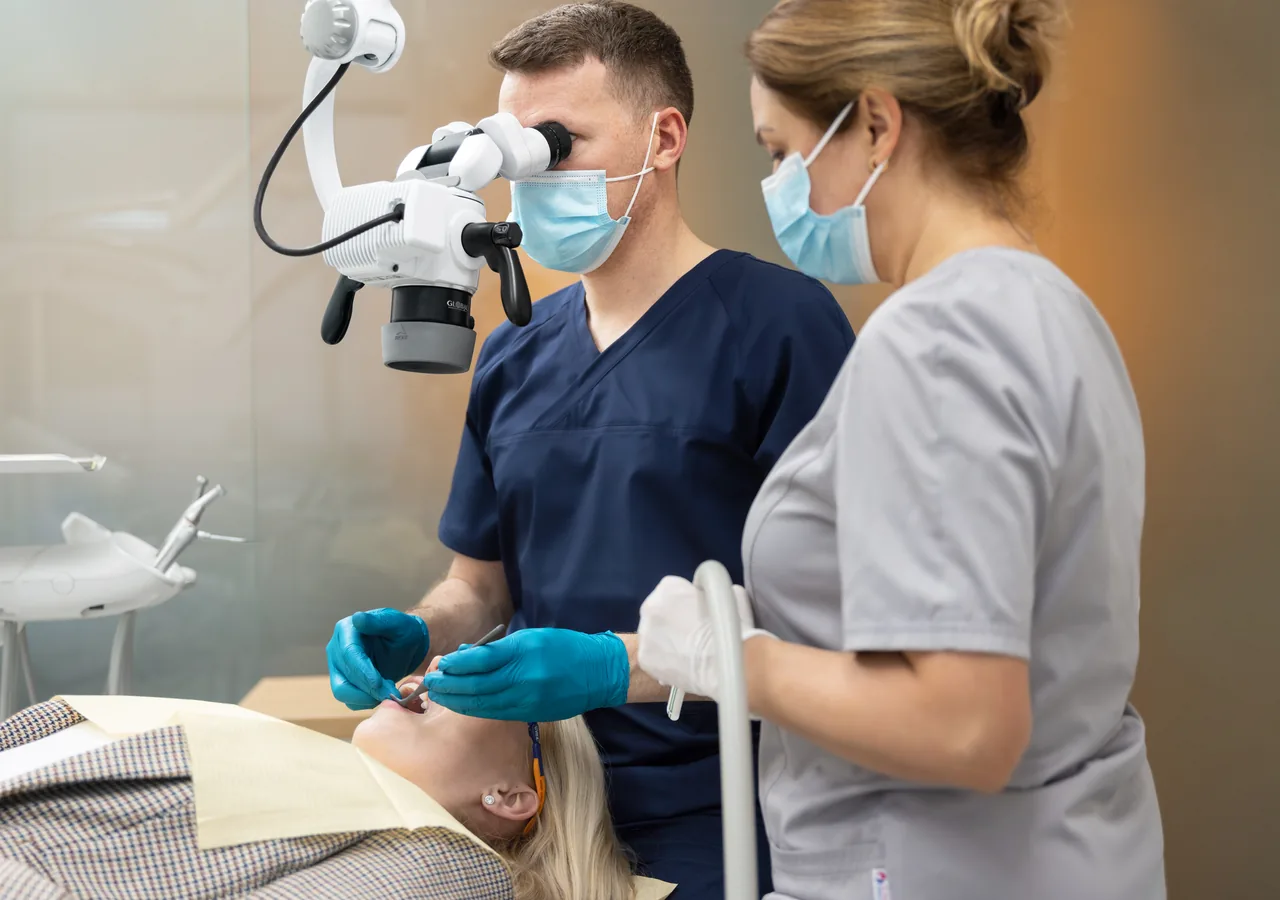
Hard Occlusal Splints for Your Patients
A referral service for dentists who want their patients to receive individually designed, professionally managed occlusal splints.
When a patient needs an occlusal splint, the appliance is only one part of the treatment.
The diagnosis, indication, design, fit, occlusal adjustment and follow-up all matter.
We provide a dedicated hard occlusal splint service for dentists who would like to refer patients for assessment and appliance fabrication while maintaining continuity of care with their own dentist.
When might referral be appropriate?
You may wish to refer a patient when you are considering an occlusal splint as part of their management, particularly where there is:
- ✓Significant or progressive tooth wear
- ✓Repeated tooth or restoration fractures
- ✓Suspected sleep bruxism or significant clenching
- ✓Extensive restorative treatment requiring consideration of occlusal protection
- ✓Implant-supported restorations where an occlusal appliance may be appropriate
- ✓Morning jaw-muscle discomfort or fatigue
- ✓A need for a professionally fabricated and adjustable appliance
- ✓A case where you would prefer another clinician to manage the splint assessment and fitting
Referral does not necessarily mean that a splint will be recommended. Each patient is assessed individually, and where an occlusal splint is not appropriate, this is discussed with the patient and referring dentist.
A clinical service, not simply a laboratory appliance
There are many different types of mouthguards and occlusal appliances.Our service is focused on individually designed hard occlusal splints, with clinical assessment and adjustment forming part of the treatment rather than simply supplying an appliance.
The process includes:
- 1
Clinical assessment
We assess the patient's teeth, restorations, tooth wear, jaw muscles, jaw joints, symptoms and relevant dental history.
- 2
Digital scanning
A digital scan is used to create an accurate 3D model of the patient's teeth.
- 3
Individual fabrication
The splint is fabricated by our dental laboratory in the UK using the patient's digital records.
- 4
Clinical fitting and adjustment
The appliance is fitted in the mouth and the occlusal contacts are assessed and adjusted as required.
- 5
Follow-up
The patient is reviewed after approximately four to six weeks to assess the appliance, adaptation and any relevant symptoms.
We work alongside the referring dentist
Our role is to provide the splint assessment, fabrication, fitting and follow-up.
We do not aim to replace the referring dentist or take over the patient's wider dental care.
Where appropriate, we communicate our findings and treatment provided back to the referring dentist so that the patient's overall treatment plan can remain coordinated.
The referring dentist remains responsible for the patient's ongoing dental care unless another arrangement has been agreed.
What information do we need from you?
A referral does not need to be complicated. Ideally, please provide:
- ✓The reason for referral
- ✓Relevant symptoms
- ✓Relevant dental and restorative history
- ✓Any concerns regarding tooth wear or fractures
- ✓Details of significant restorations or implants
- ✓Relevant radiographs or photographs where available
- ✓Your treatment objectives or particular concerns
If you have a specific question about the case, include it with the referral. For example:
“I am concerned about progressive tooth wear and repeated fracture of the patient's posterior restorations. I would like an assessment regarding whether an occlusal splint would be appropriate.”
This gives us useful clinical context before seeing the patient.
What happens after referral?
- 1
You refer the patient
Send the patient's details and relevant clinical information through our referral process.
- 2
We assess the patient
We determine whether an occlusal splint is appropriate and discuss the options with the patient.
- 3
The appliance is fabricated
Where indicated, a digital scan is taken and the custom hard splint is fabricated by our UK dental laboratory.
- 4
We fit and adjust it
The appliance is clinically fitted and adjusted.
- 5
We review the patient
After approximately four to six weeks, we review the appliance and the patient's adaptation.
- 6
We update you
We provide the referring dentist with relevant information about the assessment and treatment provided.
What we do — and what we don't promise
We believe it is important to be precise about what an occlusal splint can and cannot do.
An occlusal splint should not be presented as a cure for bruxism.
Bruxism is a complex behaviour with multiple contributing factors, and current evidence does not establish that occlusal splints reliably eliminate bruxism.
Similarly, temporomandibular disorders have multiple causes and presentations. A splint may be appropriate for selected patients, but it is not a universal treatment for TMD.
Our approach is therefore based on the individual indication for the appliance, rather than prescribing a splint simply because a patient reports grinding.
What does the evidence say about occlusal splints?
This section was written by Dr. Robert Boyd. The patient-facing version is on the night guard page.Occlusal splints are widely used in dentistry to help manage the effects of excessive tooth loading and as part of conservative management for selected patients.
However, it is important to be clear about what the evidence does, and does not, show.
Current research does not support the claim that an occlusal splint reliably stops or cures bruxism. Evidence for their use in temporomandibular disorders is also mixed, with studies showing small benefits in some patients but not consistently demonstrating superiority over other conservative treatments.
The evidence also does not show that one particular occlusal guidance design is universally superior to another.
For this reason, we do not recommend a splint simply because someone reports grinding. Instead, we assess the individual patient and consider factors such as tooth wear, fractures, restorations, muscle or joint symptoms and the overall dental situation.
The aim is to use an occlusal splint when there is a clear clinical reason for doing so, not simply because the patient grinds their teeth.
For patients with complex restorative work
Patients with extensive restorative treatment can require particular consideration when an occlusal appliance is being planned.
If your patient has:
- ✓Multiple crowns or veneers
- ✓Extensive tooth wear
- ✓Repeated restoration fractures
- ✓Implant-supported restorations
- ✓Complex restorative treatment planned or completed
we can assess the case specifically in relation to the proposed splint.
The aim is to provide an appliance that is appropriate for the patient's current dental situation and can be monitored as that situation changes.
Why refer?
- ✓A dedicated clinical service
You can refer a patient for a specific occlusal-splint assessment without having to incorporate the entire appliance workflow into your own practice. - ✓Individually fabricated
The appliance is made specifically for the patient's dentition using digital records. - ✓Clinically fitted
The appliance is assessed and adjusted in the patient's mouth rather than simply being delivered from the laboratory. - ✓Follow-up included
The patient receives a follow-up appointment to assess adaptation, fit and the condition of the appliance. - ✓Continuity of care
We communicate relevant findings and treatment information back to the referring dentist.
Referral fee and treatment cost
The patient receives the same clinical service whether they are referred by another dentist or contact us directly.
| Service | Price |
|---|---|
| Consultation and digital scanning | 160 € |
| Custom hard occlusal splint | 600 € |
The €600 appliance fee includes:
- ✓Laboratory fabrication
- ✓Fitting
- ✓Occlusal adjustment
- ✓Patient instructions
- ✓Four-to-six-week follow-up
We can discuss individual cases before referral where there is uncertainty about whether a splint is appropriate.
Have a patient you would like to discuss?
You don't need to be certain that an occlusal splint is the answer before referring.
If you have a patient with significant tooth wear, repeated restoration fractures, suspected bruxism or a complex restorative situation and would like another clinician to assess whether a splint is appropriate, we are happy to assess the case.
Kristina Kiisa Dental Clinic, Tallinn, Estonia.
For professional referrals or case discussions: [email protected] · +372 6 164 500